Recycled plastic
The
power of recycled plastic:
Sustainable in every fiber
At Idemax, we consciously choose sustainable materials. Truly sustainable materials that also prove their value in the long term. Although wood is often seen as environmentally friendly, we do not find it sustainable enough: trees must be cut down and the wood often travels thousands of kilometers before it gets here. We thought there could be a better way.
We strongly believe in the reuse of materials. As the basis for our play equipment and street furniture, we exclusively use recycled plastic - for us, the most logical and most sustainable choice. By processing local waste streams, such as household PMD waste and discarded Bebat barrels, into high-quality play equipment and furniture, we do not burden the earth with the extraction of new raw materials.
This is the circular thought in practice: we turn local waste into a new, high-quality product that lasts for generations. Barely wear-resistant, extremely weather-resistant, and permanently splinter-free. And if a piece of equipment needs to be removed after years of service, it can, thanks to the Cradle to Cradle principle, serve again as raw material.
We design and produce all our products in-house in Belgium.
Why
recycled plastic wins over wood
The ecological reality
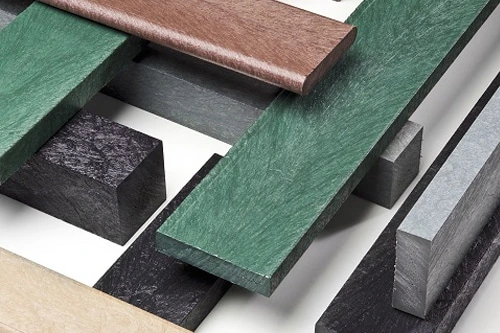
Recycled plastic, on the other hand, solves two problems at once: we do not cut down trees AND we reuse existing, local waste. This gives nature more opportunities and contributes to a more sustainable living environment.
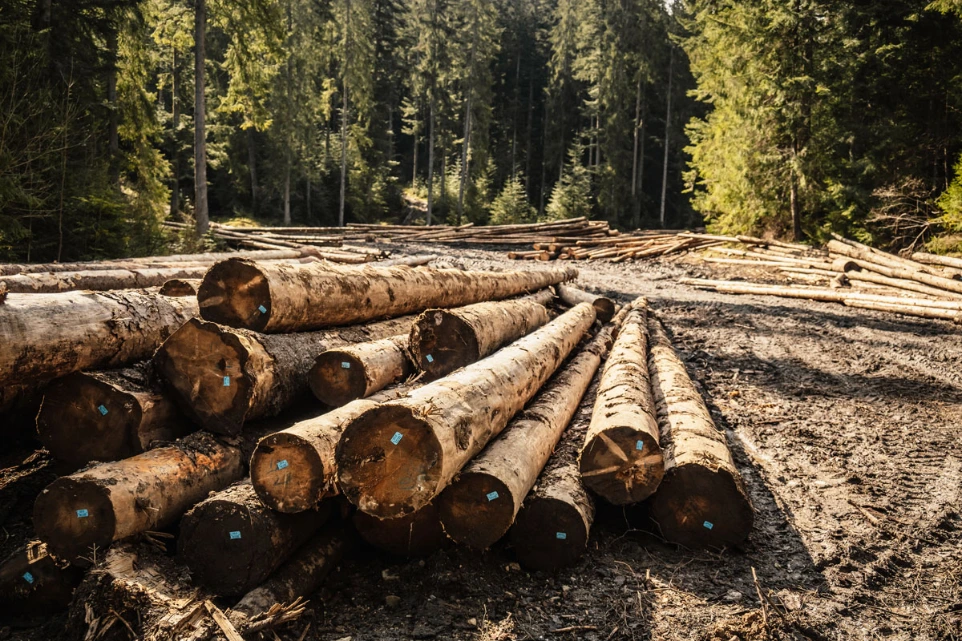
Producers of wooden play equipment and outdoor furniture create a huge demand for European hardwood. This requires trees to be cut down in distant Eastern European forests, after which the material travels thousands of transport kilometers before it arrives here. This results in significant CO2 emissions.
FSC-certified wood is a step in the right direction, but it does not address the pace of reforestation or the enormous transport distances involved.
Practical and economic benefits
Recycled plastic is extremely colorfast and durable. Thanks to these properties, our play equipment and seating furniture are completely maintenance-free. They do not rot and never require an annual paint or stain treatment. Even after years of exposure to the elements, the equipment does not split or splinter and maintains its grip, making it much safer for playing children.
These are crucial considerations when purchasing playground equipment. Although the initial purchase price of plastic playground equipment may sometimes be slightly higher, the investment quickly pays for itself thanks to minimal operating costs throughout its entire life cycle and an exceptionally long lifespan of 25 to 30 years (40 to 50 years?). After all, you save year after year on labour costs, painting products and premature replacements.

Transparent
CO₂ certificates
Curious about the exact ecological footprint of our materials? We do not believe in empty claims. For all our projects and products, we can provide official CO2 certificates for the used, recycled materials, with a transparent indication of the exact origin and the saved CO2 emissions.
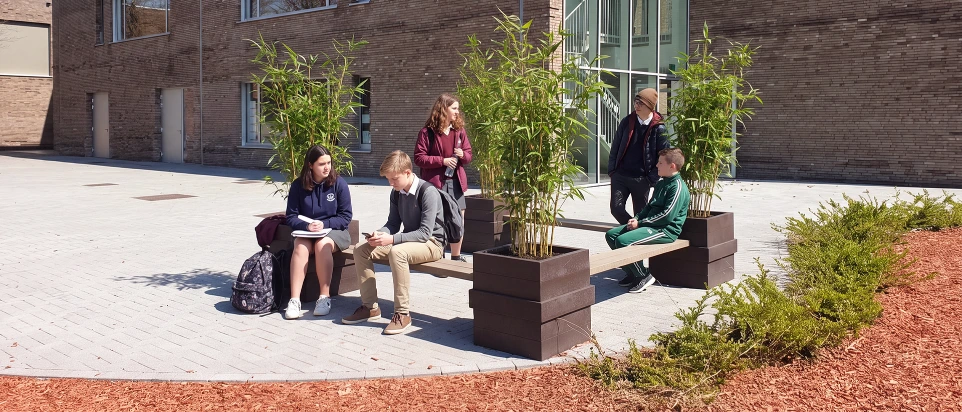
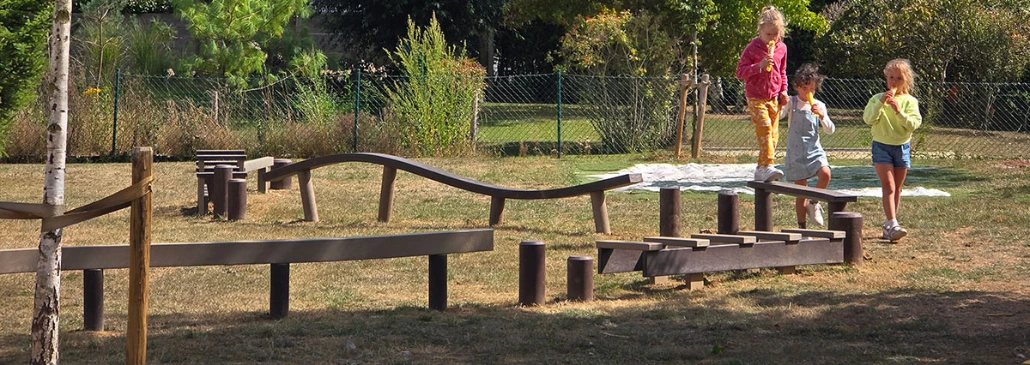
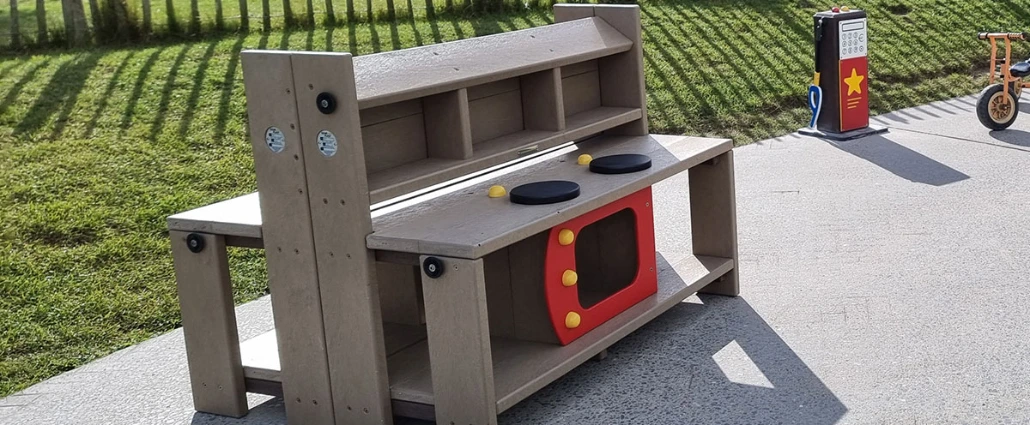
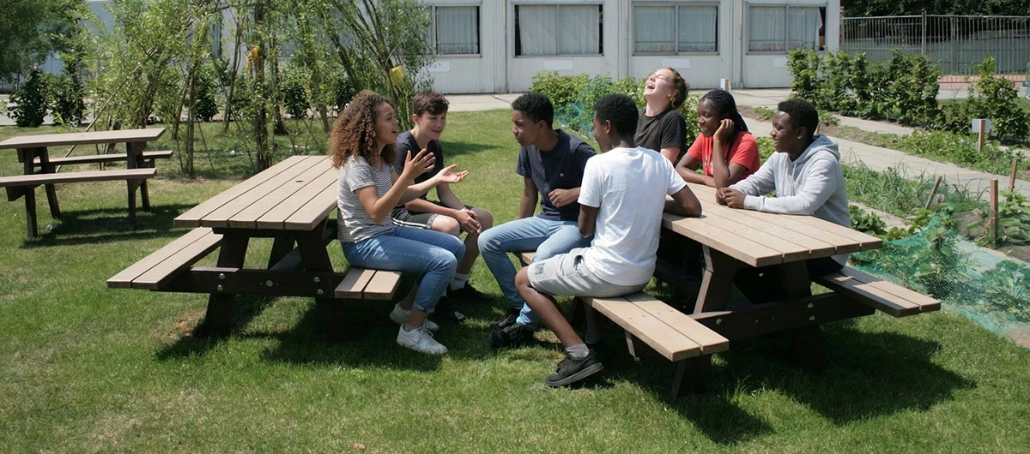
Our playground equipment and seating combine a warm, modern look with a natural texture that blends seamlessly into green surroundings.
Wood versus recycled plastic: the differences at a glance
Property | Traditional wooden playground equipment | Idemax recycled plastic |
Levensduur | A few years | 40 to 50 years |
Lifespan | Must be treated or cleaned regularly | 100% maintenance-free, at most just rinse off |
Susceptibility to rot | Sensitive to wood rot, especially at the water-air line | 100% rot-free and insensitive to water, fungi, and acids |
Safety | Risk of splinters and cracks due to dryness, may warp | Permanently splinter-free and shape-retaining with correct placement |
Colour retention | Weathers quickly and turns gray/green due to weather influences. Maintaining the original color requires oiling or staining. | Colored in the mass and fully UV-resistant / UV-stabilized |
Material movement | Shrinks and expands due to moisture absorption. | Controlled thermal movement with temperature differences. |
Raw materials and environmental impact | High CO₂ impact due to logging and transport of (tropical) wood. | Made from local plastic waste streams with a low MKI score. 100% recycled & 100% recyclable. |
Long-term costs | Lower purchase price but higher maintenance costs (labor hours and materials for maintenance) | Higher investment at purchase, but lower total cost in the long term. |
The waste that you sort at home for recycling forms the basis of our raw material. We reuse recycled plastic waste, three-quarters of which comes from our own, local environment. We consciously distinguish between two types of residual streams to complete the cycle:
The origin of our raw materials
The waste you sort at home for recycling forms the basis of our raw material.
We reuse recycled plastic waste, three-quarters of which comes from our own local area.
We deliberately distinguish between two types of waste streams to close the loop.
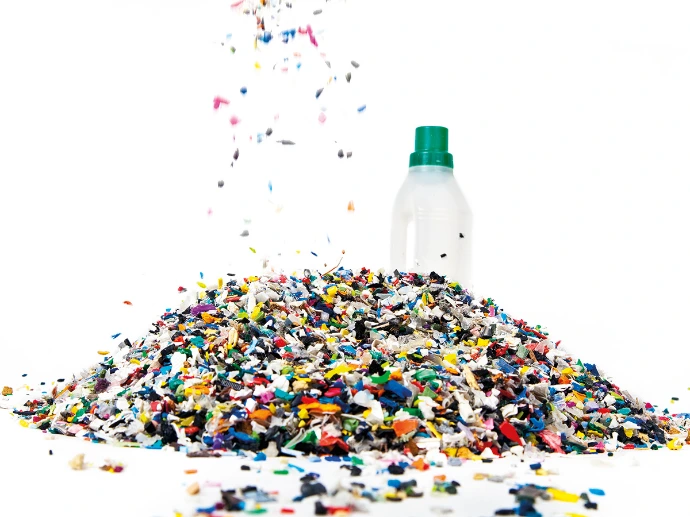
Consumer waste (Post-consumer)
This is the plastic that we all sort at home. Think of household PMD (such as butter containers, PET bottles, and caps), but also of discarded plastic garden furniture and agricultural film. The well-known green Bebat collection bins for batteries also get a sustainable second life through us; we process the old PE barrels into super strong boards.
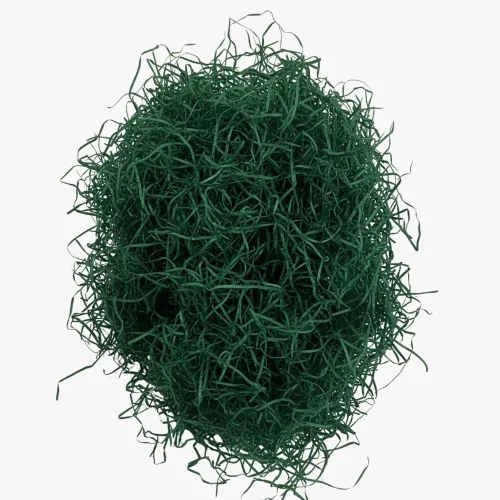
Industrial waste (Post-industrial)
This is high-quality material that remains as a residual stream in production processes. We use, among other things, the cutting scraps and excess plastic yarns that remain from the production and installation of artificial grass fields.
Our products are made from a high-quality recycled blend consisting mainly of polyethylene (PE) and polypropylene (PP). We never add virgin plastic; all the plastic used in our products is 100% circular.
From butter tub to playground equipment: the journey of your waste
01
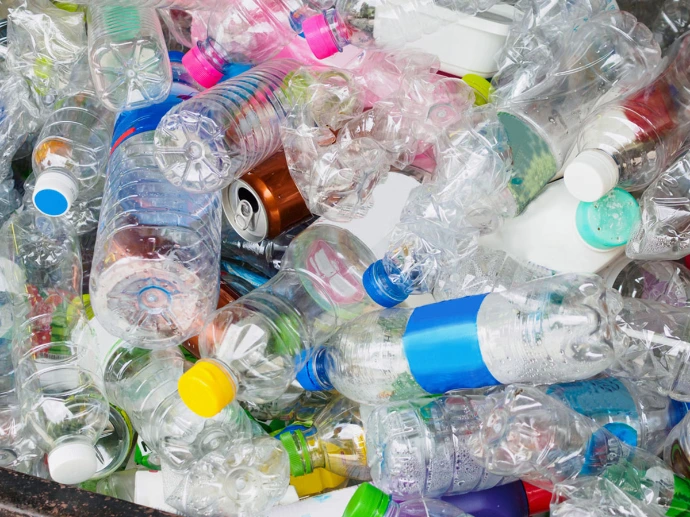
Collection by waste processors
Waste management companies collect the plastic consumer and industrial waste locally.
02
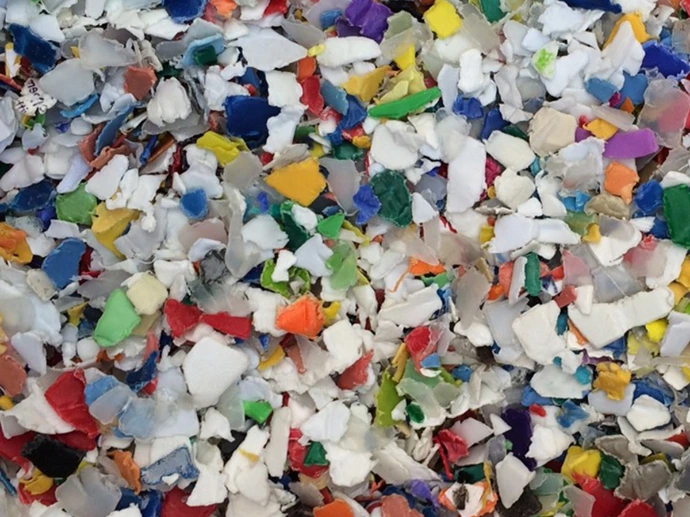
Shredding into plastic pellets
The collected plastic is thoroughly washed and mechanically ground (shredded) into clean plastic pellets, filled into large big bags.
03
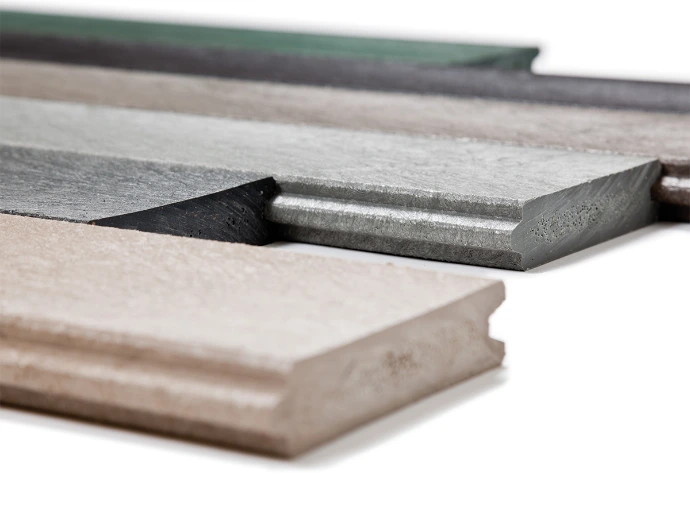
Pressing into solid planks
Our specialized processing partners (such as Govaerts Recycling) melt and press these pellets under high pressure into super strong boards, sheets, and profiles.
04
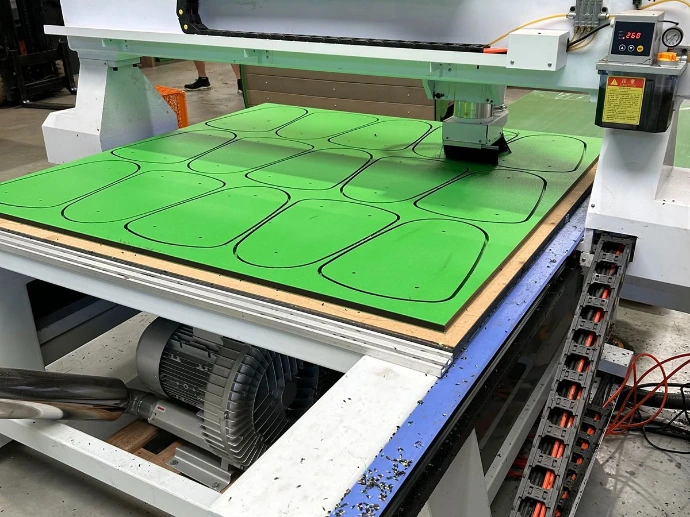
Custom work and assembly at Idemax
We use these high-quality semi-finished materials in our workshop in Mol, where we mill, process and assemble them into the final product for your outdoor space.
Multiple sustainable
Our recycled plastic performs optimally on the three main pillars of Corporate Social Responsibility:

Ecologically sustainable
We rescue local plastic waste (such as PMD and Bebat barrels) from the incinerator and transform it into a circular product. No deforestation, less CO2 emissions, and a minimal ecological footprint through our short, local chain. The maintenance-free nature of our products also avoids toxic products such as stains, paints, and other maintenance products.

Economically sustainable
An investment in Idemax is an investment in the future. With a lifespan of over 30 years and the complete elimination of hidden costs (such as expensive maintenance products or painting jobs), this is a highly profitable model in the long term. Moreover, the installation can easily be done in-house, which means direct relief for your budget.

Socially sustainable
The well-being impact of a pleasant, green (play) environment is enormous: it stimulates creativity, reduces stress, and encourages movement. A thoughtfully designed playground or aesthetic green space elevates the quality of life for every generation to a higher level. Furthermore, you support fair, local labor with strong social protection through our Belgian production, far away from cheap imports and false competition.
Frequently asked questions
Yes. Our products are manufactured in Belgium using 100% renewable electricity and have official QA-CER and EPD (Environmental Product Declaration) certifications.
These independent certifications provide documented proof that the products are genuinely made from 100% recycled plastic and that their exact environmental impact has been transparently assessed. This gives you complete confidence and solid supporting evidence when submitting sustainable public tenders or undergoing audits.
Yes, absolutely. In fact, in many respects, it is even safer and more reliable than wood.
For our playground equipment, we exclusively use solid pressed plastic. Unlike traditional wood, this material does not splinter, crack, or rot. The structural strength remains exactly the same for decades. Where wooden beams or boards can weaken over time due to moisture, insects, and fungi, our solid pressed plastic remains incredibly strong and resistant to heavy loads. It does not become slippery or hot, is vandal-resistant and extremely durable.
Safety is an absolute priority for us. All our play equipment is certified according to the strict European safety standard EN-1176. You receive a thoroughly tested product that guarantees maximum stability and safety.
No, that is actually quite manageable in practice.
When you choose equipment in soft shades, such as beige or brown, the material hardly heats up. Dark colors, such as black, attract sunlight slightly more and retain heat longer, but even then the equipment remains usable.
Plastic is a poor heat conductor. This is a great advantage compared to metal: where a stainless steel (inox) slide in the full sun quickly becomes scorching hot and thus dangerous, a plastic slide always remains comfortable and safe to play on, even in the middle of summer.